Section 1: Chair’s Foreword
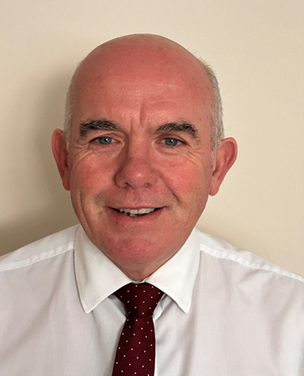
1.1 Paul Northcott – Independent Chair
Over the past twelve months, the Torbay and Devon Safeguarding Adults Partnership has demonstrated the value of determined, collaborative action in protecting adults at risk and in strengthening practice across our communities.
I am immensely grateful for the hard work, professionalism and commitment shown by colleagues across all partner organisations, particularly as we have embedded the Multi-Agency Risk Management Framework and strengthened the way learning from Safeguarding Adults Reviews informs frontline practice. Together, we have also improved quality assurance and community engagement and delivered innovative initiatives across the partnership. These achievements have been made against a backdrop of rising safeguarding demand and ongoing complexity, making the progress described in this report especially significant. As Independent Chair, I thank everyone who has contributed and look forward to building on this strong foundation as we pursue our priorities for 2025-2027.
Section 2: Our Purpose
The Torbay and Devon Safeguarding Adults Partnership (TDSAP) brings together organisations across Torbay and Devon that have a shared responsibility for safeguarding adults. Led by an Independent Chair, the Partnership provides strategic leadership to help ensure adults are protected from abuse and neglect and can live safely and with dignity.
Under the Care Act 2014, the Partnership’s primary purpose is to help and protect adults who:
- Have care and support needs; and
- Are experiencing, or are at risk of, abuse or neglect; and
- Are unable to protect themselves because of their care and support needs.
The TDSAP is the key forum where partner agencies work together to improve safeguarding arrangements across Torbay and Devon. It promotes effective partnership working, provides oversight and challenge, and helps ensure organisations fulfil their responsibilities to safeguard adults and support their wellbeing.
Section 3: Our Structure
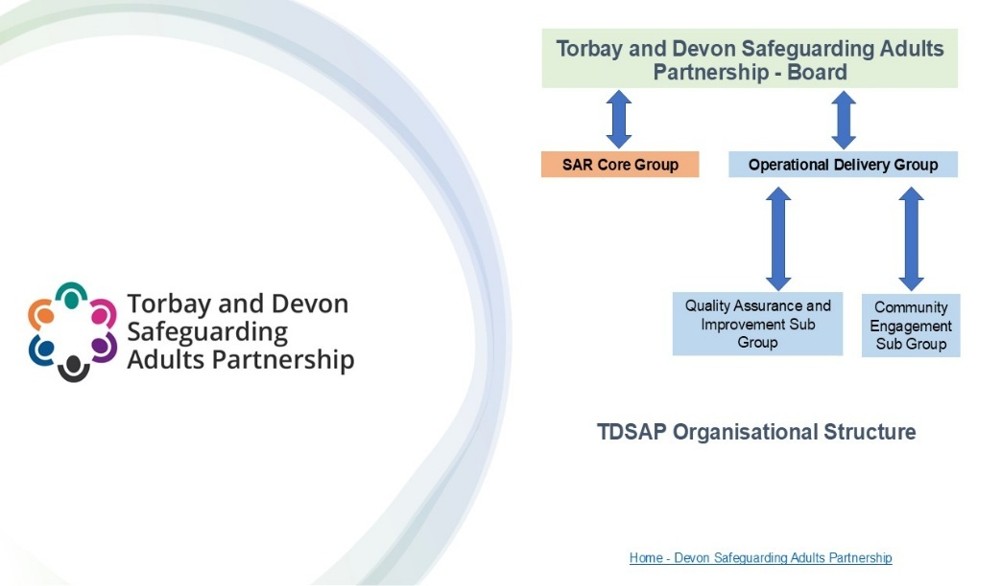
The TDSAP has established a governance structure to support and oversee the delivery of its work.
Two groups report directly to the Partnership Board:
- Safeguarding Adults Review (SAR) Core Group
- Operational Delivery Group (ODG)
The Operational Delivery Group is supported by two sub-groups:
- Quality Assurance and Improvement Sub-Group (QAI)
- Community Engagement Sub-Group (CEG)
These groups play a key role in delivering the Partnership’s priorities, monitoring progress, and supporting continuous improvement in safeguarding practice across Torbay and Devon. Their work is supported by the Partnership Practice Lead, Partnership Business Manager, and Partnership Co-ordinators.
3.1 Organisational Structure for 2025/2026
Section 4: Our Partnership Members
4.1 Statutory Partners
The Statutory Partners of the TDSAP are:
Devon County Council / Torbay Council / Devon and Cornwall Police / NHS Devon
4.2 Partners
Other partner members of the TDSAP are:
| Torbay and South Devon NHS Foundation Trust | Devon Partnership Trust |
| Royal Devon University Healthcare NHS Foundation Trust | NHS England/Improvement |
| University Hospitals Plymouth NHS Trust | Housing Representative |
| Livewell Southwest | Devon & Somerset Fire & Rescue Service |
| South Western Ambulance Service NHS Foundation Trust | Care Quality Commission |
| Department for Work and Pensions | Voluntary and Community Services Representatives |
| HM Prison Service | Healthwatch |
| The Probation Service – Devon and Torbay | The Heart of the South West Trading Standards |
| District Councils |
Section 5: Safeguarding Activity
The data below has been routinely monitored through the Performance and Quality Assurance (PQA) Subgroup and by Board Members to identify trends and areas for additional scrutiny. This includes variances against national and comparative area data. This report includes the data to demonstrate safeguarding activity over the 2025-2026 period.
Please note that at the time of completing this report, the National Safeguarding Adults Collection (SAC) data has not been published, therefore some figures may be subject to change.
5.1 Section 42 – Safeguarding Concerns and Enquiries
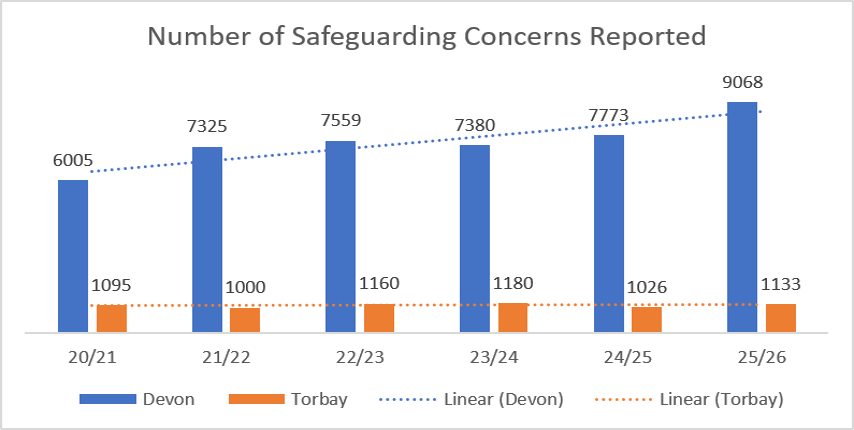
In both authorities, there has been a sharp increase in the number of concerns started. In Devon, there has been a 17% increase from 24/25, with levels at an unprecedented level. In Torbay, there was a 10% increase in concerns started, with numbers returning to previous levels after a decrease last financial year.
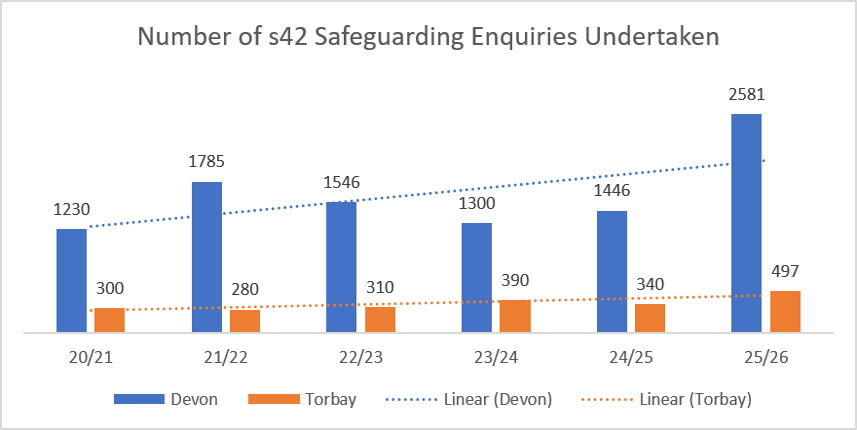
For Devon, there has been a 78% increase in enquiries started when compared to the previous financial year. This reflects both on the increase in concerns started and clarification around the threshold for proceeding to enquiry which has resulted in an increase in the conversion rate. Torbay has seen a 46% increase in enquiries started with numbers the highest for any available data.
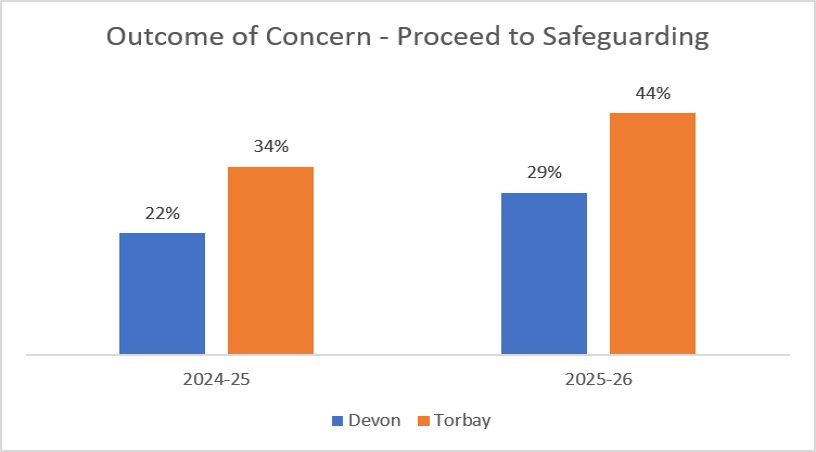
Both authorities have seen an increased percentage of concerns with an outcome of ‘Proceed to Safeguarding’. Combined with the increase in referrals to safeguarding, this has contributed to the large increase for Devon and Torbay in enquiries started.
5.2 Demographics
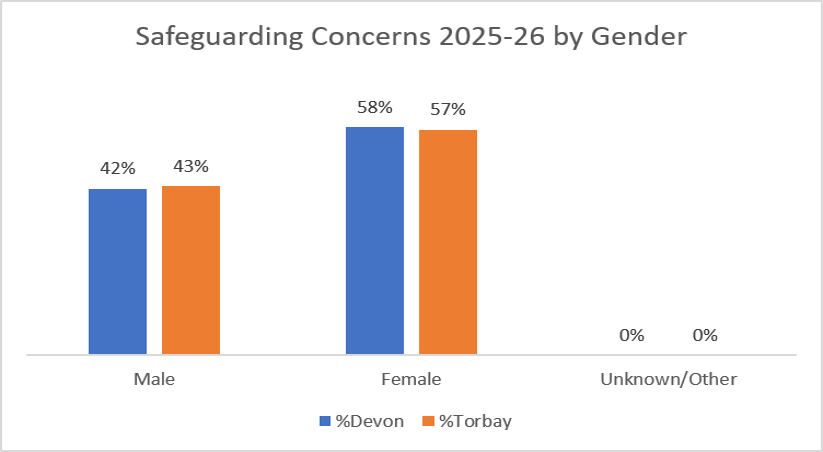
In Devon, the percentages for male and female are similar to those of last year. In Torbay, the percentage of safeguarding concerns for females rose to 62% last financial year but fell back to 57% this year. This compares to 52% of the general adult population in England being recorded as female.
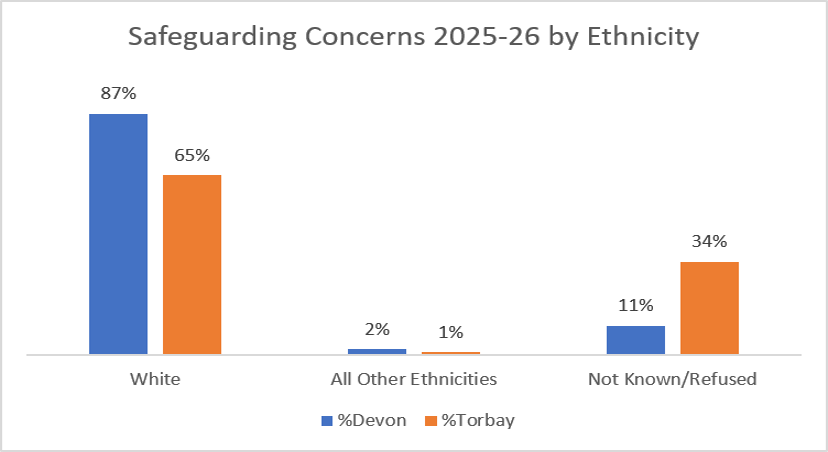
87% of individuals involved in safeguarding concerns in 2025-26 in Devon and 65% in Torbay, recorded their ethnicity as white. This is very similar to the percentages from 2024-25. 82% of the population recorded their Ethnicity as white in the 2021 census. In Devon, the percentage of concerns where ethnicity is not known has increased by 1%, in Torbay it has fallen by 1% from last year.
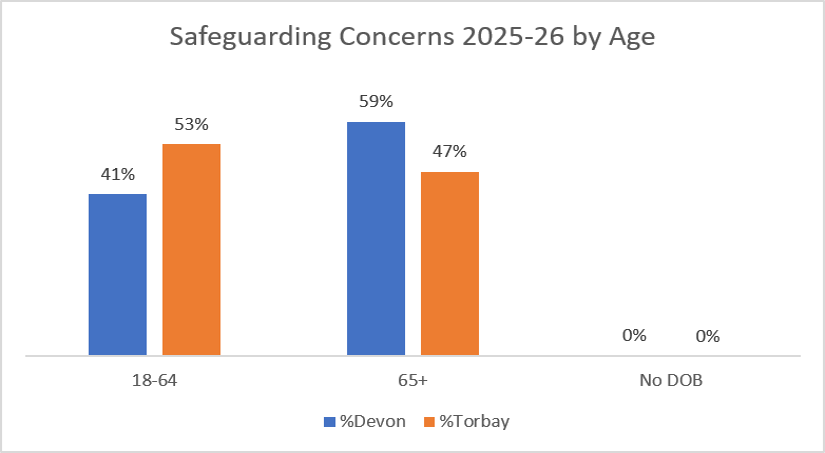
In Devon, there has been an increase in the percentage of concerns for those aged 65 and over from 57% to 59% this year. In Torbay, there has been a sharp rise in the percentage of concerns for those aged 18-64, from 44% last year to 53% this year.
5.3 Location of risk
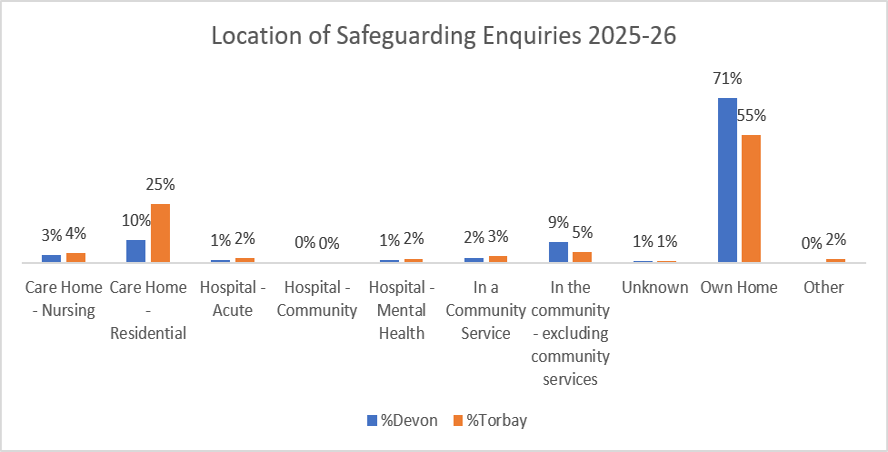
71% of enquiries in Devon and 55% of enquiries in Torbay took place within the individual’s own home, an increase for both authorities on the previous financial year.
In Devon, there has been a slight decrease in the percentage of enquiries ‘In the community-excluding community services’, and in Torbay, a slight increase in the percentage of enquiries in Residential Care Homes from 22% to 25%.
5.4 Types of Risk
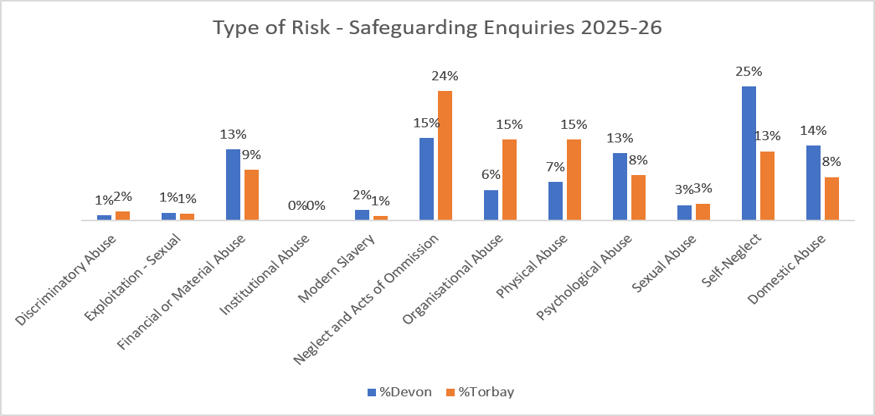
In Devon, the most common types of risk in 2025-26 were Self Neglect (25%), Neglect and Acts of Omission (15%) and Domestic Abuse (14%), an increase for Domestic Abuse from 12% in 2024-25.
In Torbay they were Neglect and Acts of Omission (24%), Organisational Abuse (15%) and Physical Abuse (15%). There has been a drop in the percentage of enquiries with Self Neglect from 19% to 13%.
5.5 Making Safeguarding Personal (MSP)
Approaches to safeguarding should be person-led and outcome-focused.
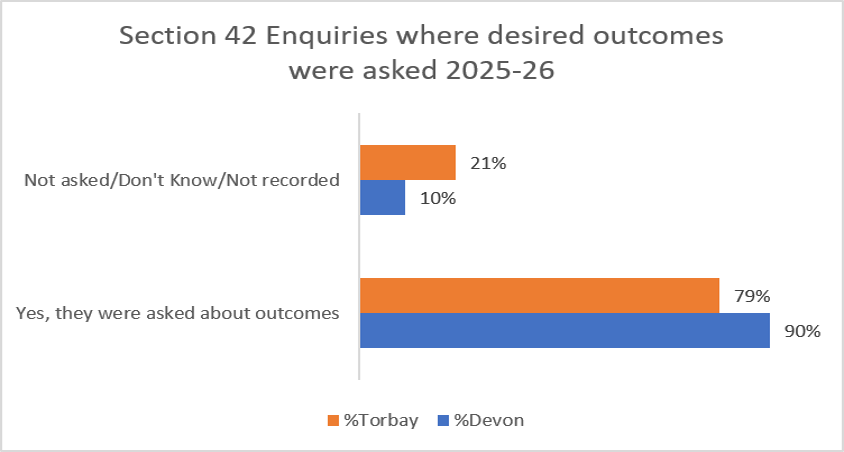
In Devon the percentage of people or their representatives asked about their desired outcomes in safeguarding enquiries in 2025-26 has fallen slightly to 90%. In Torbay this has increased again to 79%.
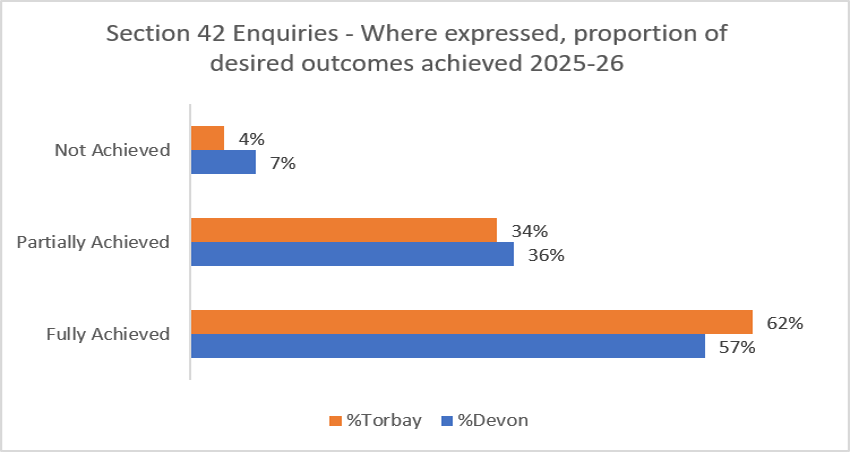
Of those asked about their desired outcomes, in Devon, 93% had their outcomes either fully or partially met, the same as last year. In Torbay there was an increase from 93% last year to 96% of those expressing outcomes having these outcomes partially or fully met.
Section 6: Safeguarding Adults Reviews (SARs) and our SAR Core Group
6.1 Summary
Safeguarding Adults Reviews (SARs) are a statutory responsibility of Safeguarding Adults Boards under the Care Act 2014. A SAR must be considered when an adult with care and support needs has died, or experienced serious abuse or neglect, and there is concern that partner agencies could have worked more effectively together to protect them. Boards also have the discretion to commission a SAR in other situations where there are significant opportunities for learning and improvement.
The primary purpose of a SAR is not to apportion blame, but to identify learning from complex safeguarding cases and use that learning to strengthen practice, improve partnership working and enhance outcomes for adults at risk. SARs provide an important opportunity for agencies to reflect on how services were delivered, understand what could have been done differently, and implement meaningful improvements across the safeguarding system.
The Torbay and Devon Safeguarding Adults Partnership (TDSAP) has a dedicated Safeguarding Adults Review Core Group that oversees all SAR activity on behalf of the Partnership. The Group considers and makes decisions on new SAR referrals, commissions reviews where appropriate, and manages the review process through to completion. It also oversees the implementation of recommendations and monitors progress to ensure learning translates into improvements in practice.
The SAR Core Group comprises representatives from key partner agencies, including NHS Devon Integrated Care Board, Devon County Council, Torbay Council, Devon Partnership NHS Trust, Devon and Cornwall Police, and other relevant organisations as required. Through regular meetings and quarterly reporting to the TDSAP Board, the Group provides assurance that lessons identified through reviews are shared effectively and contribute to continuous improvement across the partnership.
Further information about Safeguarding Adults Reviews, including the Partnership’s multi-agency policy and published reviews, is available on the TDSAP website: Torbay and Devon SARs
6.2 SAR activity during 2025/26
The TDSAP received sixteen SAR Referrals in 2025/26 from eight different partner organisations and one family member.
Following thorough consideration of these SAR referrals, the SAR Core Group decided that four
of them met the criteria for a SAR review to take place, as defined within Section 44 of the 2014 Care Act.
The themes from SAR referrals include, but are not exclusive to:
- Mental Health (any support that people receive to protect or promote their mental health and psychosocial wellbeing)
- Self-Neglect (a person being unable, or unwilling, to care for their own essential needs)
- Substance Misuse (Substance misuse develops when you continue to take substances which change the way you feel and think)
- Neglect/Acts of Omission (the failure to meet an individual’s basic and essential needs, either deliberately or by failing to understand these)
- Organisational Abuse (harm that arises from poor working practices, inadequate care, or systemic failures within an organisation, rather than from a single individual’s actions)
- Domestic Abuse (Domestic abuse is a pattern of abusive behaviour in any relationship that is used by one partner or family member to gain or maintain power and control over another).
In 2025/26, the Torbay and Devon Safeguarding Adults Partnership published five SARs, all of which are available on the TDSAP website.
With all SAR reviews, the identified learning and SAR recommendations are progressed and embedded into operational practice. The purpose of a SAR is not to reinvestigate or to apportion blame. It is an opportunity to uncover learning for all partner agencies involved and to change practices in the future.
More information is available on our website about SAR Care Act 2014 criteria, how to complete a SAR Referral and our previously published SARs
6.3 Published SARs in 2025/26
Self-neglect remains one of the most complex and persistent challenges in adult safeguarding, and it frequently features in Safeguarding Adults Review (SAR) referrals.
Recognising the need for a more impactful approach to learning and improvement, the partnership adopted a different methodology for SARs Drew, Audrey, Lyla and Jade by convening a multi-agency in-person self-neglect conference in June 2025.
This event brought together frontline practitioners to explore both practice-based and systemic issues, fostering open dialogue and collaborative problem-solving.
The aim was to move beyond traditional review formats and create a dynamic space for shared learning, reflection, and continuous improvement across the partnership.
SAR Drew
Drew worked as an engineer on cruise ships and enjoyed holidays abroad with his late wife. He was a heavy smoker and enjoyed drinking wine.
Drew had a diagnosis of COPD which alongside issues with his knees impacted on his mobility. He used mobility equipment which enabled him to maintain access to local shops. Bereavement of his wife during the pandemic resulted in Drew struggling to cope. His mental health deteriorated, and he became more dependent on alcohol. Drew continued to go out and get his own provisions; however, he was increasingly self-neglecting at home.
Drew became known to several partner agencies, which raised concerns and explored various support options. These contacts took place over several years both on the telephone and face to face. Concerns regarding how Drew was coping and regarding his physical home environment was ongoing for a long time. He appeared very able to express his views and wishes, acknowledging that since the loss of his wife he had struggled with some aspects of daily living but asserted that he was addressing these. Drew often declined offers of visits and, through disguised compliance, maintained that he was managing and did not want support from anyone.
An episode of Drew hallucinating that there are people in his flat including his deceased wife, resulted in several partner agencies being alerted to his continued isolation, loneliness and physical deterioration. The decline in his physical environment also suggested he was not coping. Again, Drew assured partner agencies that he was addressing the concerns with no further involvement, support, monitoring or follow up.
Some months later a neighbour raised concern regarding a foul smell and maggots coming through the ceiling from Drew’s flat above. Forced entry to the flat revealed the electricity was not working, with excessive black bags of rubbish throughout, black floors, brown walls, and curtains drawn, with large numbers of empty wine bottles and cigarette ends throughout. Drew’s decomposed body was discovered amongst the rubbish.
Drew was 73 years old at the time of his death.
The learning brief, which has been shared across partner organisations, is available here: SAR Drew – learning brief
SAR Audrey
Audrey lived alone in the community. She was known to have an extensive history of mental health-related concerns, including presenting with different identities, various missing person episodes and threats of suicide. Audrey also had significant physical health needs and diabetes.
It was well known to partner agencies that Audrey was neglecting her self-care and health care needs, often using her medication to self-harm or for periods of time not taking any of her medication at all. Diabetes management was complex and required daily support from health professionals to ensure appropriate daily administration. Audrey often refused to let professionals in to provide the vital support she required, and episodes of violent behaviour and outbursts towards professionals were well documented. So was her long history of self-harming behaviours.
During the last year of Audrey’s life, she was admitted to hospital on two occasions for emergency treatment due to a combination of self-neglect and neglect of her health care needs.
During the first admission, Audrey was assessed as being a danger to herself. She self-discharged from hospital and was reported as a missing person. Audrey was located following a public order incident, arrested, and taken back to hospital for medical treatment.
Four months later, Audrey was again admitted to hospital with the same concerns regarding her level of self-neglect, self-harm behaviours and lack of appropriate management of her complex diabetes and other health needs. Again, Audrey self-discharged from hospital, was located and taken back to hospital with the use of section 136 of the Mental Health Act 1983.
Shortly after being discharged from hospital, a neighbour raised concern that she had not seen Audrey for two weeks and was concerned that she may have gone missing again and come to harm. Audrey was found deceased in her home in a state of decomposition. It is yet to be confirmed whether Audrey died as a result of another medical episode or suicide.
Audrey had refused support from professionals for her mental and physical health needs for years. She also refused potentially lifesaving treatment on every occasion she was admitted to hospital and discharged back into the care of community health and care professionals.
Audrey was 50 years old at the time of her death.
The SAR learning brief, which has been shared across partner organisations, is available here: SAR Audrey – learning brief
SAR Lyla
Lyla had severe epilepsy and type 1 diabetes for which she was prescribed a range of medications. She lived in a supported living environment where she was supported with waking night staff and assistance for showering due to her fearfulness of having a seizure when on her own. She moved from this environment for a brief stay with family before deciding to move into the local area to live with her partner.
Lyla had been in an abusive relationship when she was younger and often experienced flashbacks as a result of the domestic abuse, resulting in her neglecting her physical and mental health needs. Lyla again found herself in a relationship characterised by multiple aspects of domestic abuse.
Lyla was admitted to hospital on several occasions for not managing her insulin safely and appropriately. During one admission for suspected diabetic ketoacidosis (DKA) an assessment
stated that her presentation was consistent with that of complex PTSD on the background of complex childhood traumas and emotional dysregulation.
During admissions for diabetes management, Lyla would often decline medication and engagement with specialist services would be intermittent, with Lyla refusing to eat or take any medication until she could be reunited with her partner. On her return home, the aggressive behaviour and abuse would escalate again, with accusations from both Lyla and her partner towards each other as to who was to blame. It was known that Lyla had taken overdoses previously following arguments with her partner.
Lyla remained reluctant to fully engage in any safety plan. The combination of domestic abuse, health challenges, and resistance to support placed her in a high-risk category.
Lyla was found collapsed and unresponsive at home by her partner. Paramedics attended and confirmed that she was deceased.
Lyla was 25 years old at the time of her death.
The SAR learning brief, which has been shared across partner organisations, is available here: SAR Lyla – learning brief
SAR Jade
Jade lived alone in the community. She grew up locally with parents who both had alcohol dependency issues. Jade left school with minimal qualifications; she reported that she had never been employed and relied on benefits.
Jade had a diagnosis of PTSD resulting from significant high-level domestic abuse. It is recorded that several of her relationships were domestically abusive and that this led to her seven children being brought up in care. After the split from one long-term abusive relationship, Jade spent some years as street homeless.
Jade also had diagnoses of alcohol dependence and psychosis. She was well known to several different partner agencies and was receiving monthly depot injections to support her mental health needs and daily enabling support to maintain all aspects of daily living.
Jade was admitted to hospital on a number of occasions with significant physical injuries, including a broken leg on one admission. These hospital admissions were all recorded as consequential to her being intoxicated.
Several safeguarding concerns were raised by partner agencies regarding the escalating risks of Jade’s increasing physical and mental health needs and her increased levels of self-neglect.
Enabling support services raised concern as Jade did not respond to carers visiting her property. After the third attempt, police were called to gain entry. Jade was found deceased at home in a state of severe self-neglect, two days after her last discharge from hospital.
Jade was 48 years old at the time of her death.
The learning brief, which has been shared across partner organisations, is available here: SAR Jade – learning brief
SAR Thomas
The Safeguarding Adults Review for Thomas was completed and agreed by the TDSAP Board in late September 2021.
The publication of the SAR was delayed to await the outcome of the inquest into Thomas’s death.
Progress on embedding the SAR recommendations into operational practice continued in advance of publication.
The TDSAP Board signed off all SAR recommendations as complete in early 2025.
Following contact with the Orchard family, the TDSAP Board agreed to publish the SAR in December 2025.
Thomas was 32 years old at the time of his death. He was a white UK heterosexual man. He lived in supported accommodation and was regularly seen by mental health practitioners as part of Care Programme Approach (CPA) support.
Thomas had enjoyed stable mental health for the previous three years; he was rebuilding his life and had a part-time job as caretaker at a local church.
Thomas was a Christian and attended church every day. He played a role during church services and was part of the ministry team.
Thomas had experienced a rapid decline in his mental health in the five days before his arrest. Mental health services and his support provider were aware of this decline, and efforts were made to support him and attempt to address the underlying cause of his mental health crisis in the days before his arrest.
On 3rd October 2012, police were called to reports of a male causing a disturbance in the High Street, Exeter. Thomas was restrained by police and subsequently arrested on suspicion of committing an offence contrary to section 5 of the Public Order Act.
Thomas was detained by Devon and Cornwall Police on 3 October 2012. Thomas’s presentation could have been explained by an understanding of his mental health condition. Thomas died on 10th October 2012 whilst in hospital. The cause of his death was severe hypoxic–ischaemic brain damage.
The full SAR, including the completed SAR recommendations, can be found here: SAR Thomas
Section 7: TDSAP Sub-Groups
7.1 Operational Delivery Group
The Torbay and Devon Safeguarding Adults Partnership (TDSAP) Operational Delivery Group (ODG) plays a central role in translating the Partnership’s strategic priorities into tangible improvements for safeguarding adults across Torbay and Devon. As the Partnership’s operational engine room, the group brings together senior representatives from partner agencies to oversee delivery, coordinate activity, and ensure safeguarding arrangements remain effective, responsive, and focused on positive outcomes for adults at risk.
The ODG drives implementation of the TDSAP Business Plan, ensuring agreed priorities progress and are delivered across the partnership. Through regular oversight of multi-agency practice, processes and systems, the group promotes effective communication and collaborative working between organisations, helping to strengthen safeguarding arrangements and protect members of the public from potential abuse and neglect.
One of the ODG’s most significant achievements this year has been the development, design, and rollout of the Multi-Agency Risk Management (MARM) Framework across Devon and Torbay. Developed in response to the needs of adults facing heightened risks associated with complex and multiple needs, the framework gives practitioners a structured, consistent approach to multi-agency collaboration, information sharing, and risk management.
The MARM Framework has been embedded in operational practice across partner organisations, giving practitioners a practical mechanism to identify, prevent, and reduce high levels of risk for adults with complex needs whose circumstances often span organisational boundaries. By supporting coordinated risk planning and shared decision-making, the framework strengthens agencies’ ability to intervene proactively, reduce escalating risk and improve outcomes for some of the most vulnerable adults in our communities.
Alongside this work, the ODG continues to receive regular reports from the Quality Assurance and Improvement Group and the Community Engagement Group, enabling the Partnership to monitor progress, identify emerging issues and support continuous improvement across the safeguarding system.
The governance structure places the ODG at the heart of TDSAP’s structure, reporting directly to the TDSAP Board. The group includes the chairs of the Partnership’s sub-groups and provides quarterly assurance on progress against the Business Activities.
Membership includes representatives from local authorities, NHS providers, the Integrated Care Board, Devon and Cornwall Police, the Care Quality Commission, probation services, His Majesty’s Prison Service, and other key safeguarding partners. This diverse membership supports informed decision-making and shared ownership of safeguarding outcomes.
Overall, the Operational Delivery Group continues to provide the leadership, coordination, and operational oversight required to deliver the Partnership’s ambitions, ensuring safeguarding activity remains focused, collaborative, and effective in protecting adults across the area.
7.2 Community Engagement Group
The Community Engagement Group (CEG) ensures that the voices of adults with care and support needs, carers, and community representatives help shape safeguarding adults work across Torbay and Devon.
A key aim of the Group is to improve awareness and understanding of safeguarding adults, particularly in communities that are harder to reach. During the year, the CEG strengthened engagement with voluntary and community sector organisations and worked closely with people with lived experience to better understand the barriers and challenges they face in accessing support and safeguarding services.
The Group has continued to deliver on its commitment to co-production, working collaboratively to influence safeguarding adults’ priorities, review partnership publications and help develop accessible information and awareness resources.
The CEG also made a significant contribution to planning and delivering Safeguarding Adults Awareness Week, helping shape engagement activities and promote safeguarding messages across Torbay and Devon. This work has supported the Partnership’s aim of increasing public awareness of adult safeguarding and encouraging communities to play an active role in preventing abuse and neglect.
Reporting quarterly to the Operational Delivery Group, the CEG continues to provide valuable insight, challenge, and feedback, ensuring the Partnership’s work remains informed by the experiences of adults, carers, and local communities.
7.3 Quality Assurance and Improvement
The Quality Assurance and Improvement (QAI) Sub-Group plays a key role in helping the Torbay and Devon Safeguarding Adults Partnership (TDSAP) understand whether safeguarding arrangements are making a positive difference for adults across Torbay and Devon. The group provides assurance that partner organisations are working effectively together, learning from experience, and continually improving support for people at risk of abuse or neglect.
During 2025/26, the QAI Sub-Group successfully delivered its objectives by bringing together information from across partner agencies to identify safeguarding trends, monitor performance, and highlight areas of good practice. This has strengthened the Partnership’s understanding of local safeguarding issues and supported informed decision-making to improve services.
A significant focus of the group’s work has been ensuring that learning leads to better outcomes for people. Through oversight of safeguarding data, the group has provided assurance that adults are receiving safer, more effective and person-centred support.
The group has also monitored how learning from Safeguarding Adults Reviews has been embedded into practice, helping partner organisations make meaningful improvements and reduce the risk of similar circumstances occurring in the future.
The QAI Sub-Group has also strengthened the Partnership’s focus on lived experience by encouraging partner organisations to seek feedback from adults supported through safeguarding processes.
Work undertaken during the year has supported improved safeguarding training, increased sharing of good practice between organisations, greater scrutiny of safeguarding performance, and stronger partnership accountability.
At the heart of the group’s work is a commitment to the six safeguarding principles of empowerment, prevention, proportionality, protection, partnership and accountability. By promoting these principles across all partner organisations, the QAI Sub-Group has helped ensure that safeguarding remains focused on keeping people safe while respecting their rights, choices and independence.
Section 8: Summary of Partner Achievements During 2025/26
Below is a selection of the key partner achievements, in relation to safeguarding adults, during the year:
8.1 Devon County Council (DCC)
Devon County Council Integrated Adult Social Care service has introduced dedicated social care leadership safeguarding locality meetings across the organisation. These meetings have established a clear, consistent structure for safeguarding leadership within operational services, strengthening local ownership and improving how safeguarding practice is discussed, reviewed, and developed. Their introduction has enabled better communication of learning, greater oversight of practice issues, and a stronger focus on improvement activity, all of which have contributed positively to the quality and consistency of safeguarding practice across the organisation.
Devon County Council Integrated Adult Social Care delivered a “Learning Together” Safeguarding Practice Takeover programme, bringing practitioners together across localities through case-based, practice-led workshops. The programme strengthened application of the six safeguarding principles, with a strong focus on prevention, early risk identification and proportionate, timely action. It has reinforced partnership working, improved information sharing and supported more coordinated multi-agency responses. This has driven greater consistency in applying Care Act duties, including Section 42 criteria, timeliness, proportionality, and improved recording and accountability.
Devon County Council Integrated Adult Social Care identified key safeguarding improvement priorities through CQC preparation under Theme 3: Safety, spanning leadership, governance, quality assurance, performance and practice quality. A strengthened Safeguarding Adults Improvement Plan, informed by an independent review, is improving system responsiveness, strengthening how risk is identified and managed, and enhancing protection from abuse, neglect and harm while supporting people to live safely and as they choose.
8.2 Torbay and South Devon NHS Foundation Trust (TSDFT)
The responsibility for adult safeguarding in Torbay is formally delegated from Torbay Council to Torbay and South Devon NHS Foundation Trust through established partnership arrangements. This integrated approach continues to provide significant benefits, enabling a more joined-up safeguarding system that delivers timely, coordinated health and social care responses to concerns, and supports effective multi-agency working. The Local Authority has been rated “Good” by the Care Quality Commission (CQC), reflecting the strength of these arrangements, with a continued strategic focus on embedding the principles of Making Safeguarding Personal, ensuring that safeguarding responses are person-centred and outcome-focused.
Feedback from people who have experienced safeguarding interventions remains consistently positive. Through independent quality assurance processes, individuals report that they feel listened to, involved, and well-informed throughout the safeguarding process, and that they value the support provided. This qualitative feedback is systematically reviewed and used to inform continuous service improvement and strengthen practice.
Within regulated health services, the Friends and Family Test (FFT) continues to provide an important mechanism for capturing patient experience. By asking people whether they would recommend the services they have used, alongside follow-up questions, the FFT offers valuable insight into both positive experiences and areas for improvement. This aligns with wider safeguarding objectives by ensuring that the voice of the individual informs service delivery and quality assurance.
Over the past 12 months, the health safeguarding team has prioritised strengthening workforce capability through the development of training and resources. Safeguarding adults training has been redesigned to improve accessibility and engagement for staff across services. In addition, an independently commissioned Mental Capacity Act (MCA) audit has enabled the organisation to build on its existing strengths by developing targeted training aimed at enhancing staff knowledge, confidence, and application of the legislation in practice. There has also been a strengthened integration of the Independent Domestic Violence Advocate (IDVA) role within clinical teams, improving frontline support and responsiveness to individuals experiencing domestic abuse.
Within Adult Social Care, there has been a continued focus on learning and improvement in response to Safeguarding Adults Reviews (SARs) published by the Torbay and Devon Safeguarding Adults Partnership (TDSAP). This includes embedding learning through practice-based training approaches, such as the introduction of applied exercises on self-neglect, and enhancing multi-disciplinary oversight arrangements across SARs, Domestic Homicide Reviews, suicide reviews, and Prevent activity. The service has also responded to findings from an independent Deprivation of Liberty Safeguards (DoLS) audit, implementing a revised operating model to optimise the use of available resources and improve performance.
Alongside these developments, there has been a continued emphasis on strengthening the use of data and intelligence to monitor safeguarding activity, identify emerging risks, and support proactive management oversight. Collectively, these improvements demonstrate a sustained commitment to delivering high-quality, compliant safeguarding services that are responsive to the needs and experiences of local people.
8.3 Devon and Cornwall Police
Protecting Vulnerable People PowerApp
A new Protecting Vulnerable People PowerApp has launched for frontline officers to provide concise, easy-to-read, up-to-date PIP 1 advice on best practice when dealing with vulnerable persons across all the vulnerability crime types.
The app is designed to assist officers with practical advice on initial actions, considerations, process flowcharts, safeguarding, and referrals. It also provides links to further detailed guidance on the internal SharePoint and Investigation Academy sites, and links to external agencies who can provide assistance and support. The aim of the App is to provide a resource that officers can access either at scene or when needed to refresh knowledge, presented in a bite-sized format for easy reference.
Dementia Safeguarding Scheme
The Force has teamed up with Plymouth-based charity Memory Matters to pilot a new Dementia Safeguarding Scheme and will consider Peninsula-wide development if successful. People with dementia may have an increased risk of missing episodes, and the new scheme aims to reduce wandering episodes that become missing person searches.
First pioneered by Avon & Somerset Police, people affected by dementia who sign up to the scheme are given wearable devices that can help if they get lost or disoriented.
All the information held in the devices is controlled by the individual or the people who support them. The scheme also incorporates the Herbert Protocol, encouraging members to fill out a form with vital information about a vulnerable person in the event that they go missing.
8.4 Devon Partnership Trust
During 2025–2026, Devon Partnership NHS Trust (DPT) continued to play an active role within the Torbay and Devon Safeguarding Adults Partnership and its subgroups. Trust representatives contributed clinical and mental health expertise to partnership assurance, quality improvement and learning from statutory reviews.
Safeguarding activity increased during 2025–2026. The Trust completed approximately 100 more section 42(2) safeguarding adult enquiries than in the previous financial year; 382 enquiries had been caused out to DPT during the reporting period.
DPT continued to require registered clinicians and practitioners to complete Level 3 safeguarding children and safeguarding adults training.
Key developments and achievements during 2025–2026 included:
- commissioning and completing an independent review of the Trust’s safeguarding provision, with an implementation plan to be progressed during 2026–2027;
- appointing an Interim Head of Safeguarding
- implementing a safeguarding dashboard from 1 April 2026, reducing reliance on manual spreadsheet reporting and improving directorate-level oversight;
The Central Safeguarding Team maintained a substantial programme of workforce support. Staff attended 811 safeguarding supervision sessions during the year, and 404 staff accessed individual consultations.
Executive and Board assurance continued to be provided through:
- oversight through the Integrated Safeguarding Committee and directorate safeguarding committees;
- quarterly Safeguarding and Legal Bulletins and communication through Safeguarding Champions;
learning and action plans arising from Safeguarding Adults Reviews, Domestic Homicide Reviews, Child Safeguarding Practice Reviews and Mental Health Homicide Reviews.
8.5 NHS Devon
While NHS reforms are underway and guidance continues to evolve, primary legislation remains in force. Statutory duties therefore continue to sit with ICBs until any legislative changes are made.
In the past year, NHS Devon continued its collaboration with the Torbay and Devon Safeguarding Adults Partnership (TDSAP) to maintain and enhance the quality of safeguarding adults reviews. This collaboration focused on identifying progress and sharing valuable learning across the health economy.
The main SAR themes identified are self-neglect, mental ill-health, substance misuse, and acts of omission. The Designated Professionals have utilised this knowledge to inform their preventative and improvement work. One example being a Mental Capacity Act (MCA) self-assessment completed by NHS providers in April 2025. There was a 100% response rate. The audit has given assurance that all providers are compliant with statutory functions.
Recommendations for NHS Devon are actively monitored by the NHS Devon Safeguarding Steering Group, and the resulting insights are disseminated to staff through tailored training sessions, staff bulletins, and quality assurance meetings.
Additionally, NHS Devon supported the partnership to review and update the self-neglect and hoarding guidance, which is now available on their public website.
The NHS Devon Safeguarding Adults Designated Professional facilitated discussions at a conference on self-neglect, where four safeguarding adults reviews were examined last summer.
TDSAP redesigned their subgroup structure to create a Quality Assurance and Improvement subgroup (QAI). The Designated Nurse co-chairs the subgroup where assurance activity is undertaken to evidence whether learning from safeguarding adults reviews is embedded into practice and delivering the impact desired. The group also assures learning standards and delivery across the health and social care system.
The Designated Nurse has championed and been part of the implementation of the Multi-Agency Risk Management Framework (MARM), providing a structured and coordinated approach to support timely and effective information sharing for adults who are exhibiting high-risk behaviours or are at significant risk of harm due to their current circumstances. It encourages a collaborative, preventative, and early intervention-focused response, aiming to reduce risk and improve outcomes for the adult’s health and wellbeing.
The Devon and Cornwall Sexual Violence Trauma Pathfinder project funded by NHSE ended in December 2025. More than 350 practitioners have been trained to deliver trauma stabilisation techniques to people they are working with. The project has demonstrated a positive impact on those individuals who have experienced trauma following sexual abuse.
Professional working relationships between TDSAP and NHS Devon ICB safeguarding colleagues continue to be professional, effective and trusted.
8.6 Royal Devon University Healthcare NHS Foundation Trust
Strong Safeguarding Culture and Partnership Assurance
The Trust continues to meet SAAF 2024 requirements, demonstrating effective partnership working across all safeguarding priorities. A positive safeguarding culture is evidenced by increasing referrals, strong staff confidence, and comprehensive training, particularly in trauma-informed practice and self-neglect.
The Trust continues to work closely with partners to strengthen recognition and response, with increased disclosures from patients and staff resulting in timely safety planning and support. Learning from reviews is embedded and informs continuous improvement, supported by robust governance and Board assurance.
Embedding Person-Centred Practice and Patient Voice
Making Safeguarding Personal is well established, with the MARM Framework embedded across services and supported by dedicated leadership. This has strengthened a person-centred approach, enabling individuals to manage risk, particularly within community services. Improvements are evidenced through audit, patient feedback, and the increased use of lived experience to shape practice, including within transitional safeguarding. Progress in accessible communication and co-produced engagement supports patients and families to better understand care, decision-making, and the impact of MCA and DoLS.
Strengthened MCA/DoLS Practice and Least Restrictive Care
The Trust demonstrates strong MCA and DoLS oversight, including effective 7-day review processes. Work across discharge, mental health, and learning disability services has improved the consistent application of mental capacity and best interests’ decision-making, reduced restrictive practices, and enhanced patient and carer understanding. Good practice in identification, action and oversight around Domestic Abuse remains embedded across all clinical areas, strengthened by the recommissioned Health IDVA service, supporting a more responsive, person-centred and least restrictive approach to care.
8.7 Probation Service
We have linked adult safeguarding training to pay progression for staff so we can ensure that this important learning is prioritised.
We have 100% compliance rate for people having undertaken their safeguarding adults training.
We continue to hold quarterly safeguarding briefings for all staff to ensure learning from Safeguarding Adults boards is disseminated. During these meetings, we review learning from Safeguarding Adults Reviews and ensure that staff are aware of any upcoming training opportunities.
This year, we have shared SAR learning and used these briefings as an opportunity to also launch the HMPPS Adult Safeguarding Charter with our staff. This outlines our roles and responsibilities related to Adult Safeguarding as HMPPS employees.
We have been committed to the promotion and implementation of the MARM Framework through engagement with partners in the development stage and in its launch across our Probation Delivery Unit.
8.8 Devon and Somerset Fire and Rescue Service
Devon and Somerset Fire and Rescue Service are continuing to embed safeguarding further into the organisation. Internal governance arrangements including the Safeguarding Steering Group and Safeguarding Board ensure that senior managers, including our Chief Fire Officer, have oversight of all aspects of safeguarding across the service and these forums have provided oversight around some complex safeguarding cases including those with multiple fire risks, and frequent callers to the service.
Further work has been carried out to ensure that internal fatal fire review meetings routinely consider the potential for SAR referrals following fatal fires and ongoing discussions with the board have supported our work around ensuring we share learnings from fatal fires or significant incidents with partner agencies to ensure we collectively reduce fire risk within the community.
Work has been progressed this year around our communications calendar to ensure our safeguarding messaging is targeted, consistent, and aligned with safeguarding priorities. We are currently undertaking work around our internal resource page to ensure staff have accessible safeguarding information to hand when they are attending incidents or home safety visits. In addition to this, we have updated the service’s internal mandatory safeguarding e-learning package to ensure all staff have an understanding of safeguarding.
Engagement has continued with the service’s whole-time operational crews across our service area, which has been really successful, and we are beginning to see enhanced quality of safeguarding referrals made internally to our safeguarding team. We are currently working on an engagement programme with on-call firefighters. Historically, time pressures, location and turnover of staff have made this engagement challenging, but we are exploring ways that we can engage with on-call staff to ensure safeguarding knowledge and awareness is embedded within this sector of our staff.
8.9 South Western Ambulance Service NHS Foundation Trust
The South Western Ambulance Service NHS Foundation Trust (SWAST) is responsible for the provision of ambulance services across an area of 10,000 square miles, which is 20% of mainland England. The Trust serves a total population of over 5.5 million and is estimated to receive an influx of over 23 million visitors each year. Our core operations focus is the delivery of emergency ambulance 999 services.
During 2023/24 the SWAST Safeguarding Team underwent an external independent review. A final report with recommendations was accepted on the 31st of October 2023.
An improvement plan was developed and framed around 5 key deliverables:
1. Robust governance, assurance & reporting
2. Safeguarding Team capacity
3. Safeguarding referral system
4. Data capture, audit and learning from incidents
5. Safeguarding Education & Supervision
Action against these deliverables commenced with immediate effect and significant progress was made during 2024/25. During 2025/26 all outstanding actions have been completed, and the Safeguarding Team is transitioning into business as usual.
There is a Safeguarding Specialist for each locality within SWAST, in addition to a central Safeguarding Education Specialist, Learning Disability, Autism and Dementia Lead and our Complex Care Team. Our Safeguarding Specialists conduct statutory and non-statutory reviews on behalf of the Trust when there have been Safeguarding cases which have resulted in significant harm or death. They also participate in the Child Death Review process on behalf of the Trust.
Learning and actions emerging from statutory reviews include:
- Mental Capacity – The Trust has reviewed its Mental Capacity arrangements and actions are underway to identify a Trust MCA lead and to strengthen MCA training. The revised Trust MCA policy has been approved, and work is underway to review our Mental Capacity Assessment tools.
- Professional curiosity – Safeguarding education within SWAST has increased significantly since 2023/24. All frontline staff receive 4.5 hours on their development days, which will cumulatively amount to full Level 3 Safeguarding compliance for all frontline staff in 2026/27. Training is developed by the Safeguarding Education Specialist who delivers a train-the-trainer session for Learning and Development. Bespoke and ad-hoc Safeguarding training opportunities are available throughout the year to address identified areas of learning and specific topics. Professional curiosity is a golden thread running throughout Safeguarding training and Safeguarding supervision
- Missed Safeguarding referrals – SWAST has developed a new Safeguarding referral process including new forms and automation. This has been launched using staff communications, county leadership teams and our Safeguarding Specialists. Resources have been developed to support staff in recognising Safeguarding concerns and making a quality Safeguarding referral. Promotion and training in relation to Safeguarding referrals will continue throughout 2026/27.
- Recognition and reporting of Domestic Abuse – SWAST Safeguarding Team have undertaken a full review of its Domestic Abuse processes and has revised them in consultation with our system partners. The new Domestic Abuse process will be launched during 2026/27. The revised processes will be audited as part of the Trust audit programme in late 2026/early 2027.
The SWAST Safeguarding Team continues to work closely with our system partners. This can be evidenced by:
• Active participation in Safeguarding Boards across all localities, attendance at Board subgroups, and participation in statutory review processes and learning from experience events
• 2025 SWAST Safeguarding conference, with speakers from Unseen, the DIVA’s and Avon Fire and Rescue Service
• Chairing and engagement in Multi-agency Adult at Risk Meetings (MARM) and Complex Care meetings
• Representation and involvement in Allegation Management Meetings (AMM), chaired by the Local Authority LADO or PIPOT
• Improved relationships and engagement in Multi-Agency Safeguarding Hubs (MASH)
• Development of Care Home community of practice with Care Home collaboratives and providers across the region.
Section 9: TDSAP Priorities 2025/27
Under the Care Act 2014, the TDSAP must develop and publish a strategic plan that clearly sets out how it plans to achieve all its statutory objectives. To view the TDSAP Strategic Business Plan, please click: TDSAP Business Plan
In developing this strategic plan, the partnership has worked closely with partner organisations and sought input from community groups to develop a set of priorities that best reflect the needs of Torbay and Devon.
The work of the partnership is not limited to these priorities: flexibility is a key characteristic of the TDSAP and priority will also be afforded to urgent themes and risks that present themselves throughout the plan period.
The TDSAP Board agreed these three strategic priorities for the period from 2025 to 2027.
- To seek assurance from partners in relation to practice improvements in key risk areas
- To seek assurance from partners that learning from SARs is embedded into practice
- To improve awareness, engagement and inclusion
How will we monitor and ensure delivery:
- The TDSAP Business Activity Plan monitors and reviews the development, progression and delivery of the actions that support these Strategic Priorities
- The Operational Delivery Group holds the Business Activity Plan and reports on progress to each TDSAP Board meeting
- We will regularly monitor and assess the safeguarding data and performance to inform future thinking and direction of travel
- An Annual Report is produced that describes the activity undertaken by the partnership